
10th September 2024
Don’t panic! Your path to successful e-commerce SEO
The Search landscape is, and always has been, changeable and volatile. Even if you follow all the best practices out there, you’re really only one algorithm update away from complete chaos.
What compounds this stressful state of affairs is the sheer volume of strategies, tasks, and tech that are all vying for your attention. With so many fires to fight, which pumps do you put your hands to in your efforts to get things done and drive growth?
Given the importance of SEO for e-commerce websites it’s essential to always keep rolling with the changes. The best way is to follow some general principles that will help you do the right things in the right way. This helps you drive success in the here and now. It also means that even if some seismic event happens in the SERPs that looks set to wash away your traffic and crush your visibility overnight you can minimise the impact, adapt, and then recover.
Focus on what matters for successful e-commerce SEO strategies
This sounds obvious, but we often encounter SEO or marketing teams where the focus is on chasing the latest trend or trick, or just worrying about metrics that might make SEO look good. Or at least keep the Eye of Sauron the CFO off the SEO budget.
This often leads to prioritising activity that doesn’t really support wider business goals effectively. So being clear on what the important KPIs are is the essential first step for building winning e-commerce SEO strategies.
Some of the usual suspects include:
- Organic traffic: The number of visitors coming to your site through search engines. More visitors to site (as long as they’re good quality, which if you’re doing the rest of our steps right they will be) should support greater sales volumes.
- Conversion rate: This might seem like it’s more the domain of UX or CRO, but effective e-commerce SEO always has one eye on improving conversion rates. Better quality traffic landing on a well optimised site with high quality content is a recipe for success here.
- Average order value: Again, while this might seem like it has little to do with SEO just consider how effective content and cross-linking of products can increase upsell opportunities.
- Customer lifetime value: What does SEO have to do with this? Well, simply put if you get the right people to your site via search they’re more likely to convert and become invested in your brand. For sure, CRM is critical but you need to start the relationship off right, and effective e-commerce SEO strategies think of the customer through their whole journey. (we call it Search Experience Optimisation.
Whatever mix of KPIs you choose they must align with your business objectives. Nailing down your objectives and KPIs can take some time but don’t see it as something that slows down your progress. Instead see it as setting the right direction of travel so that you actually reach your destination instead of getting lost or going round in circles.
Now you can prioritise your efforts and measure the impact of your SEO strategies effectively.
Prioritise your e-commerce SEO tasks
You can consider your strategy until you’re blue in the face, but at some point you’ve got to roll your sleeves up and get your hands dirty. But with so many SEO tasks it’s all too easy to take a scattergun approach, or just get on with things that are easy to get done, as opposed to things that are really going to yield progress towards those all important KPIs you’ve just defined.
E-commerce SEO optimisation consists of a smorgasbord of tasks and tactics, but success will only happen through prioritisation. Build out a manageable action plan by sorting projects and tasks based on both their level of effort and their potential impact.
Whether you do this using the How, Now, Wow matrix favoured by our Experience team in their workshops or a simple traffic light system is up to you. Either way it’s essential so that you can then get to work on things in the right order and allocate resources effectively.
Don’t think you have to just work on things that deliver maximum impact first. Quick wins can be essential for building momentum, so some low hanging fruit that give a modest result quickly are worth going after. But equally don’t fall foul of avoiding harder tasks that could yield big gains. Chase what’s easy for too long and you could end up making little real progress.
We like to use a task management system to organise and assign tasks and track progress. What you use isn’t as important as having a tool in place, but avoid the dreaded Excel from Hell that then gets forgotten about on somebody’s hard drive.
Pick the right e-commerce SEO tools
One of the joys and curses of SEO is that there are so many tools out there to help you. From keyword research and competitor analysis, to rank tracking and site auditing there’s definitely a tool to support your e-commerce SEO optimisation efforts. But it’s also easy to get completely lost and make the wrong decisions when it comes time to choose.
Fortunately, if you’ve got the KPIs for your e-commerce SEO strategy sorted, and have taken time to plan out and prioritise your tasks, you should have a good idea of the tooling you need to support success.
But the SEO tool choice is just the start. We often see teams that have all the right kit but are unsure of how to best use it. It’s not surprising given that some e-commerce SEO tools can do so much for you. To get the most out of the tooling you have you do need to go beyond the surface. Many can help you automate repetitive tasks, surface important insights, and free you up to focus on the important strategic and deep thinking work that adds real value.
Build a strong foundation for success
Your e-commerce SEO success hinges on a solid technical SEO foundation. If you don’t have the right base to build on, everything is liable to collapse at any minute. SEO can already feel like building a house on shifting sands, but you can put in the solid underpinnings yourself.
Too often this unglamorous aspect of e-commerce SEO is overlooked, mostly because it can be time consuming and tricky to get right. However, optimising here yields big benefits by acting like a nitro boost for your other SEO work.
Key areas to think about are:
- Website structure – Convoluted sites with confusing hierarchies, dead ends, and missing pages all add up to a nightmare for users and search engines. Fixing information architecture issues and other “structural” problems is essential.
- Improving Core Web Vitals – Page speed and other user experience metrics mean your customers have a smooth time on your website and are more likely to convert. It also sends important signals to search engines that can help search performance.
- Ensuring proper indexing – A poorly indexed website will have all kinds of issues with discoverability and ranking. This in turn impacts visibility and traffic. So if you want your e-commerce SEO strategy to deliver results, you should address any issues with indexing.
Create content that counts
Content is king. A cliche so true it’s the first thing Google Suggest tries to tell me I want when I type in ‘Content is’ (see screenshot). But it really is true, especially in the world of e-commerce SEO.
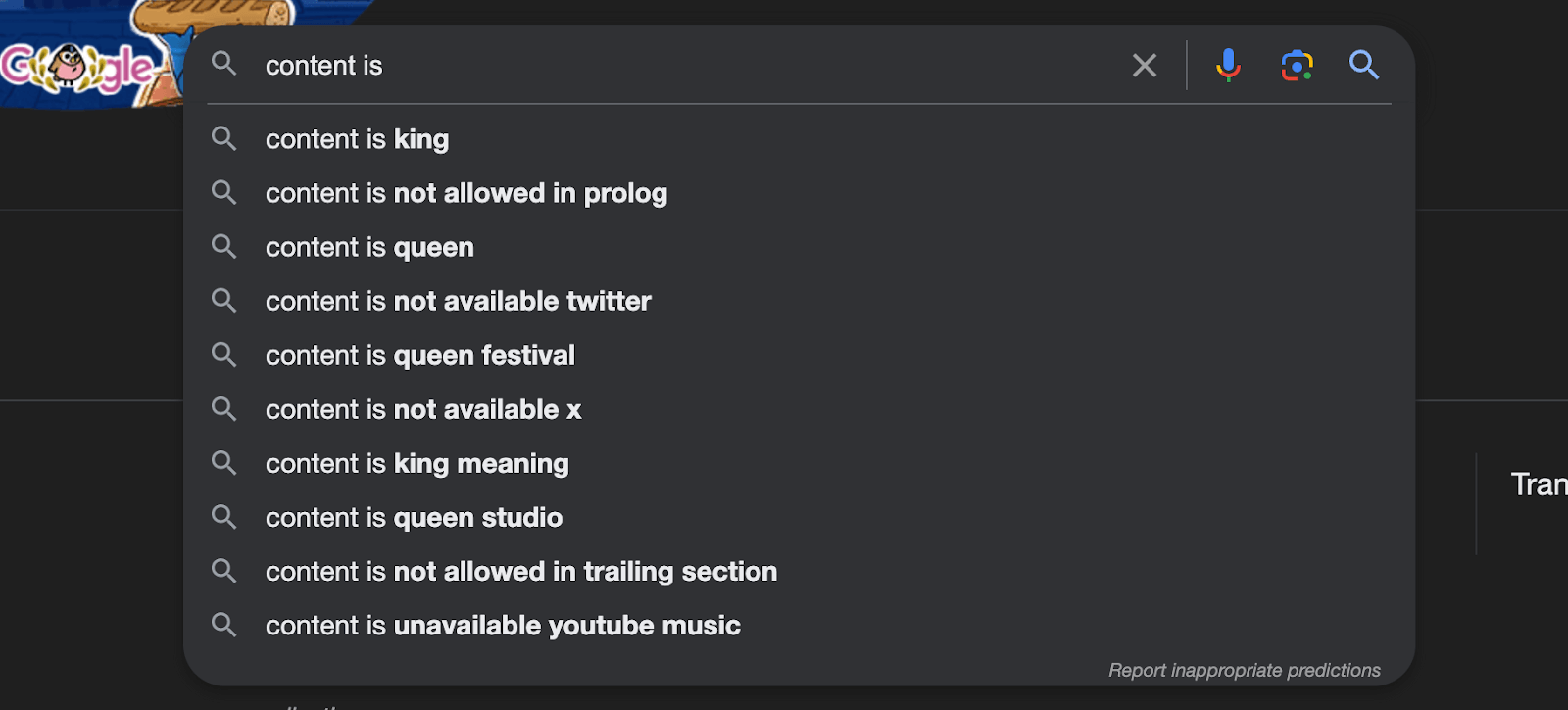
During their journey to purchase your customers are likely to want to do research, and the best way to help them (and nudge them towards buying from your brand) is to provide high-quality content that meets their needs.
Your focus should be on providing useful, helpful, and engaging content at each stage of the funnel. But as Rand Fishkin points out, while SEO is really important here don’t let keyword mania blind you to other really important tactics and channels. Build your content with a customer and business goal centricity first (this is why setting out those objectives and KPIs in step 1 is so important), then worry about making it work in search and beyond.
Successful e-commerce SEO is within reach
By following these steps, you can overcome the natural feeling of overwhelm when you’re doing SEO for e-commerce. You’ll be able to create a focused, effective SEO strategy for your e-commerce business that will yield results. Remember that progress, not perfection, is the key to success.
And we can definitely help you make progress with your SEO. Drop us a line to find out how.