
19th April 2024
Turning digital marketing reports into actionable data
Living in such a data-rich world means every click, scroll, and interaction paints a picture of our customer’s digital journey.
You have a treasure trove of insights at your fingertips, but as Malcolm Gladwell claims,
“Extra information is more than useless. It’s harmful. It confuses the issues.”
The struggle is real for marketers. According to Forbes, the two biggest issues facing marketers are too much data and a lack of capability to analyse it. This is backed by an extensive study by Braze, a customer engagement platform, which found that four out of five companies feel like they’re swimming in too much data.

What data do I showcase, and how?
When it comes to SXO (Search Experience Optimisation), we’re looking at a variety of interlocking pieces of data from Search Engine Optimisation (SEO), User Experience (UX), and Conversion Rate Optimisation (CRO), so the possibilities are extensive:
SEO reports
We can track keyword rankings, search volume trends, and backlink profiles to understand how our website performs in search engine results. Traditionally, this is done in an organic search tool such as SEMrush or Corigan. There’s also some incredibly useful insight into impressions, clicks and site issues from Google Search Console. Then, we track what makes it through to the website, e.g., organic traffic by users and sessions, and landing pages. This is most commonly done in Google Analytics.
UX reports
Data on user behaviour, such as time spent on site, engagement rates, and click-through rates, offers valuable insights into how visitors interact with our website; these can also be captured with a tool like Google Analytics. Additionally, heatmaps and user session recordings provide visual representations of user journeys, highlighting areas for improvement. Tools for this include HotJar and Microsoft Clarity.
CRO/UXO reports
Conversion metrics, such as conversion rates, goal completions, and funnel analysis, can help you pin down bottlenecks in the user journey. These insights will give you opportunities for optimisation. These are also available in Google Analytics. Once you’ve spotted a potential problem area, tools like HotJar and Clarity allow you to follow the journey of specific users to identify areas of rage clicks and quick-backs that need resolution.
Now, that’s a lot of potential data sources. With a variety of tools available to collate information from, it’s a great idea to create a digital marketing dashboard using a tool like Google Data Studio (or Looker Studio, if you’ve managed to recall the rebrand).
This streamlines data collection, works for various marketing tasks, and ensures your team is aligned, rather than each member using their own tools and missing out on what others are doing.
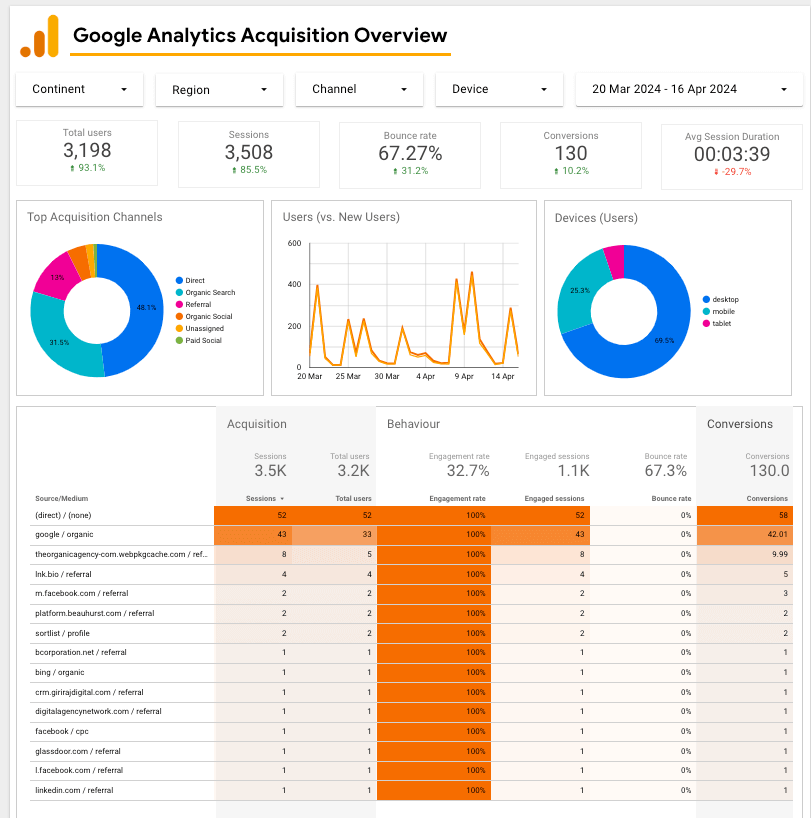
Wading through the mud
Our real challenge isn’t the sheer volume of data. It’s our knack for turning it into actionable insights. Clay Shirky summed it up perfectly:
“There’s no such thing as information overload, only filter failure.”
It’s time to address those monthly client reports – they can feel like opening Pandora’s box. Those colourful charts and graphs can be captivating; as a data enthusiast, I’m tempted to add more and more exciting visuals. However, amidst the dazzle, it’s easy to lose sight of what truly matters.

So, here’s the golden rule: when it comes to data, less often means more.
It’s time to focus on trimming the excess and honing in on what truly drives results – from SEO to UX to conversion rate optimisation (CRO). Streamline your regular reporting to include only the necessary information (which usually isn’t as much as we think).
Five top tips for your SXO marketing dashboard
Here are five tips to fine-tune your approach and create a regular reporting dashboard that’s useful, rather than overwhelming:
- Start with a goal. What’s the digital dream for your company? Define your objectives and let them guide your data, from SEO rankings to user engagement metrics. These should tie in with the overall business goals and be clear to everyone working on your digital marketing teams.
- Assess your data stash. Data is everywhere, so let’s tidy up! Check your tools. Are they providing the data you need reliably, or have they become too confusing with frequent updates? Make sure you’re using the right tools for each task. Also, review what different teams are reporting. Are your SEO and Paid Media teams reporting conflicting conversions from different sources? Before selecting which metrics to report, consider your overall strategy.
- Keep it simple. Don’t drown in data. Only report what you really need. Align your goals with a few key metrics that will guide your decisions effectively.
- Your report is not forever. Just because you have absolutely nailed the report you need right now doesn’t mean it is set in stone for all time. Your report can evolve as your business does, but try to replace elements you no longer need to review regularly rather than just adding to the load.
- Build outside the box. Reserve detailed charts and graphs for separate reports. Do you need to analyse every Christmas page’s performance monthly, or just during the holiday season? Keep special projects and investigations in separate reports, ready for when you need them, without cluttering your regular monthly overview.
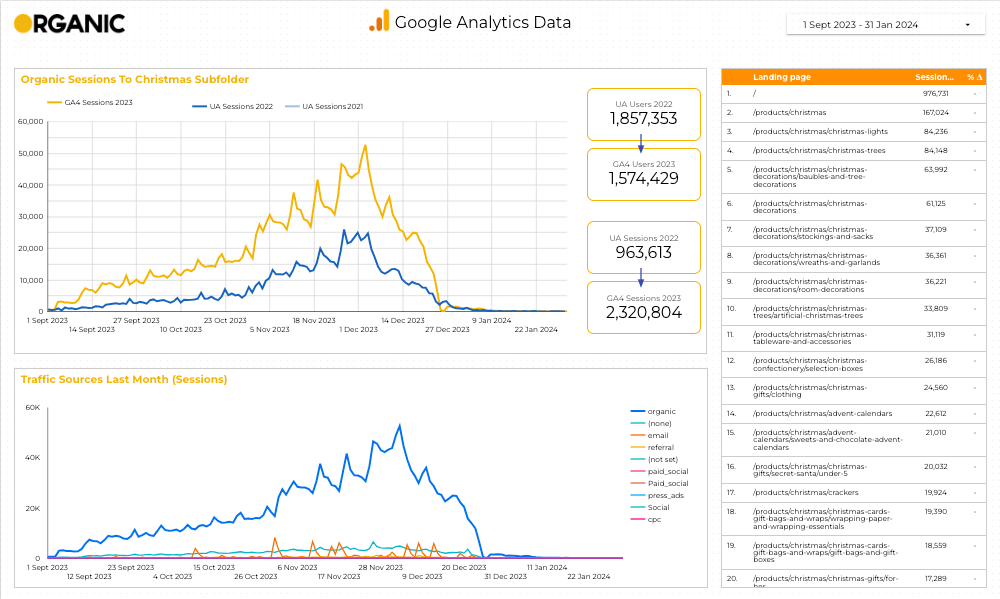
Having an overarching monthly or bi-weekly report that realigns you with your primary business goals, assesses your performance, and pinpoints areas for improvement is crucial for staying on track.
Whether you’re a marketing agency or part of an internal marketing team, it’s easy to become consumed by individual aspects like PPC campaigns or content marketing strategies. However, when thinking on a broader scale, with SXO encompassing the entire user journey, maintaining a bird’s-eye view of key metrics for each element is vital.
Spotting an issue allows you to dedicate time to investigating the relevant area of the funnel for potential causes and solutions. However, it’s important not to let these additional investigations take away from your important overview time.
Ready, Set, SXO
There it is! Excelling in reporting within the world of SXO revolves around finding the perfect equilibrium between overwhelming data and meaningful insights.
By tapping into the power of SEO, UX, and CRO metrics using handy tools and jazzy dashboards, marketers can cut through the noise and focus on what really matters. It’s not about drowning in data but about filtering out the good stuff.
So, let’s keep refining our approach, setting clear goals, and tweaking our reports to steer our digital journey towards success in this ever-changing online world. And of course, we’re here to assist you with your Search Experience Optimisation whenever you need it.